
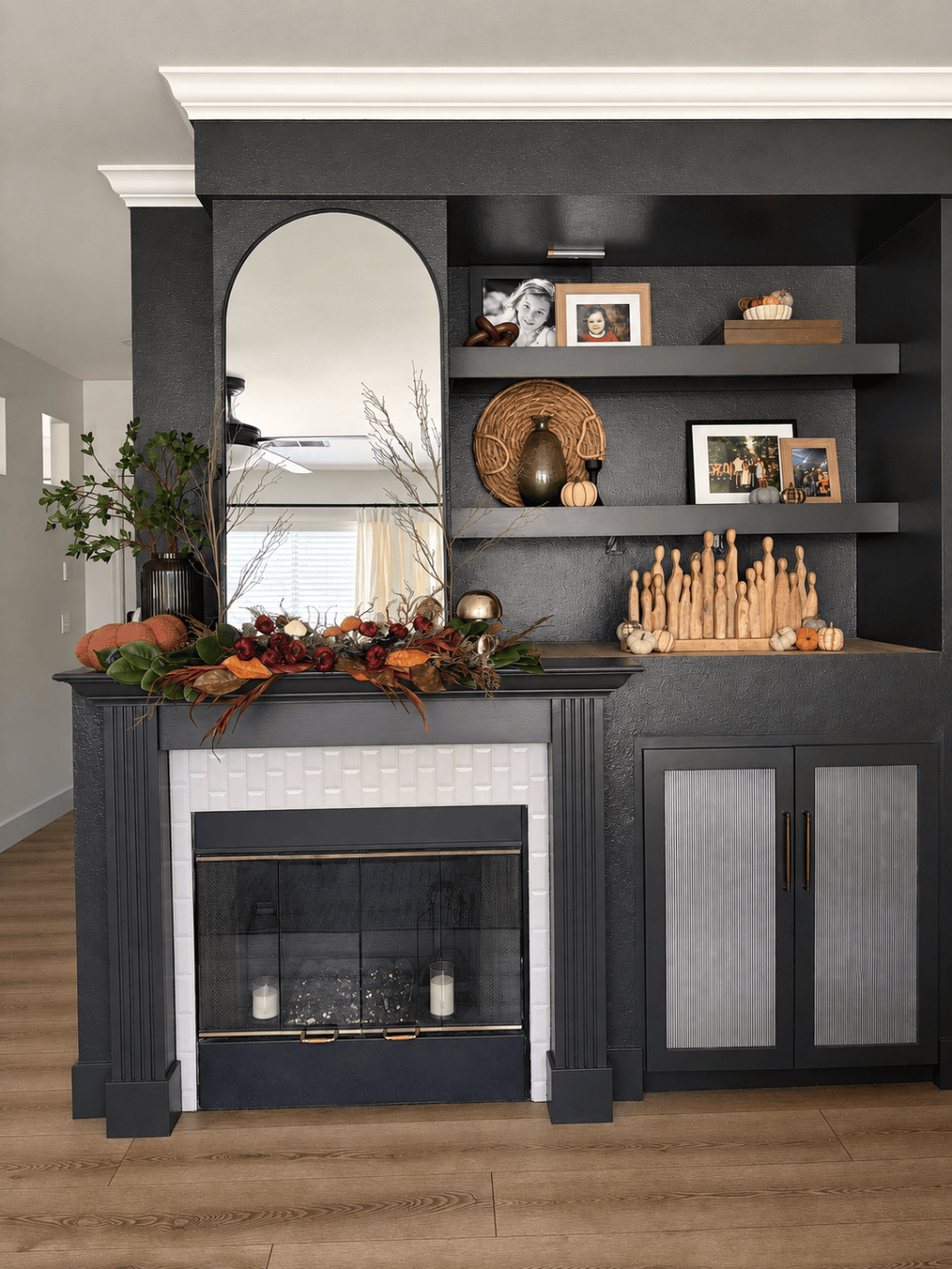
I love decorating for fall, but this year I wanted to do it a little differently.
Instead of decorating the house for fall, taking everything down for Halloween, and then changing it again for Thanksgiving, I wanted to create one really good base that I could build on all season.
The goal was a warm, slightly moody woodland look that still felt like my house — lots of natural textures, deeper fall colors, branches, mushrooms, pumpkins and greenery without making every surface scream fall decor.
So this is my early fall layer. When Halloween gets closer, I can add bats, darker accents and a few spooky pieces. After Halloween, those can come back out and I can add a few Thanksgiving touches instead.
Much easier.
Starting With a Fall Color Palette
I kept most of my everyday neutral decor in place and worked fall into what was already there.
Instead of traditional orange everywhere, I leaned toward:
- Deep burgundy
- Forest and mossy greens
- Warm brown
- Cream
- Muted orange
- Black accents
- Natural branches and greenery
I also mixed different textures instead of trying to match everything perfectly. Velvet pumpkins, moss, glass, wood, branches and softer fabrics make the rooms feel layered without needing a huge amount of seasonal decor.
That also makes it much easier to change the look as we move toward Halloween and Thanksgiving.
The Fireplace Mantle
The fireplace became the main focal point of the room.
I started with the pieces that normally live here and then added fall around them instead of completely restyling the entire space.
One of the biggest changes was adding the tall natural-looking branches. The extra height made a huge difference and helped balance the scale of the fireplace and built-ins.
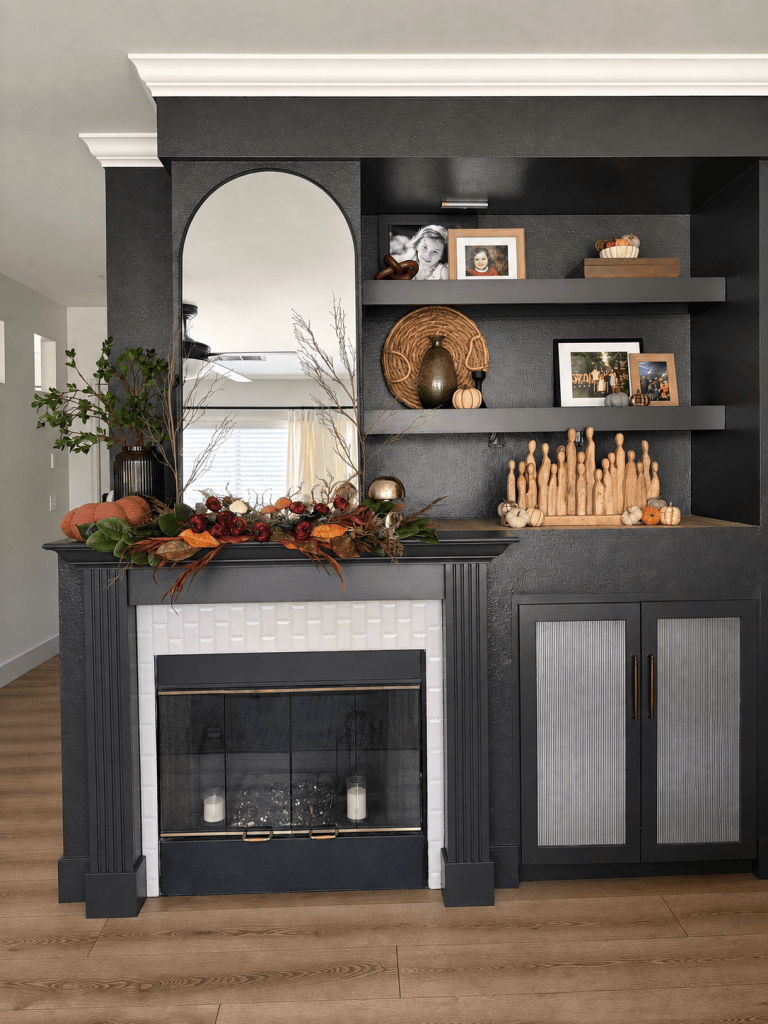
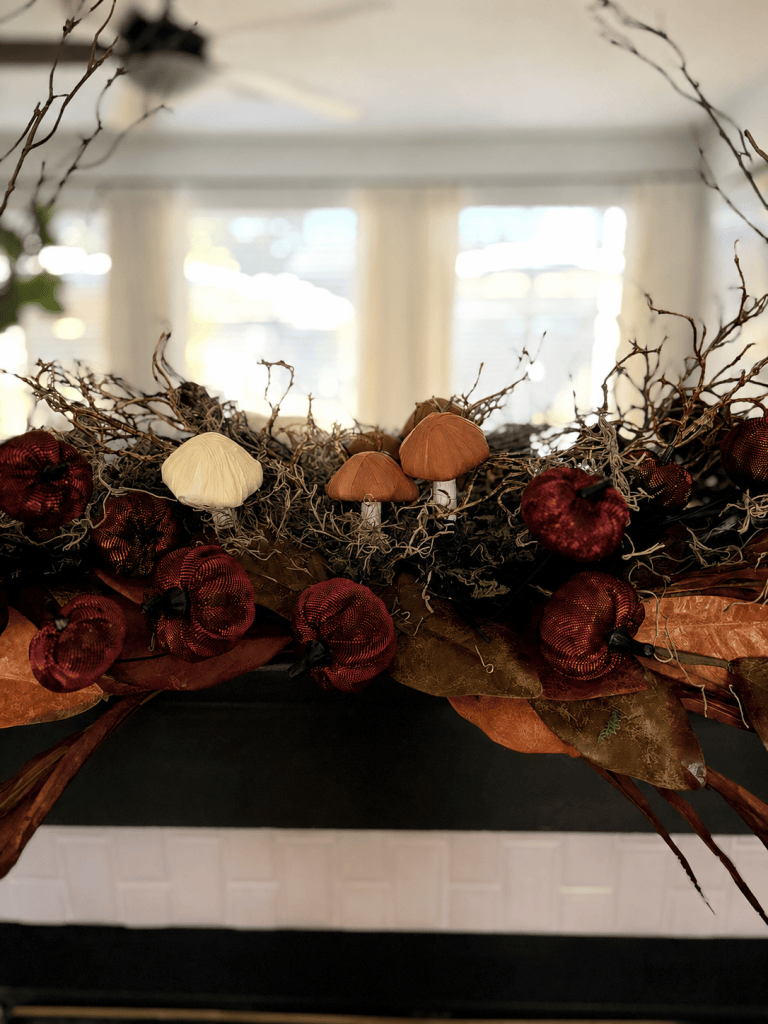
Then I layered in pumpkins in deeper, softer colors instead of using a matching pumpkin set.
I originally tried a lighter pumpkin here, but it was throwing the whole look. Once I removed it and stayed with the deeper tones, everything immediately felt more cohesive.
Sometimes decorating really is just moving something around twenty times and finally admitting that one piece needs to go.
Creating the Woodland Details
This might be my favorite part.
I wanted little woodland elements throughout the room without turning it into an actual theme.
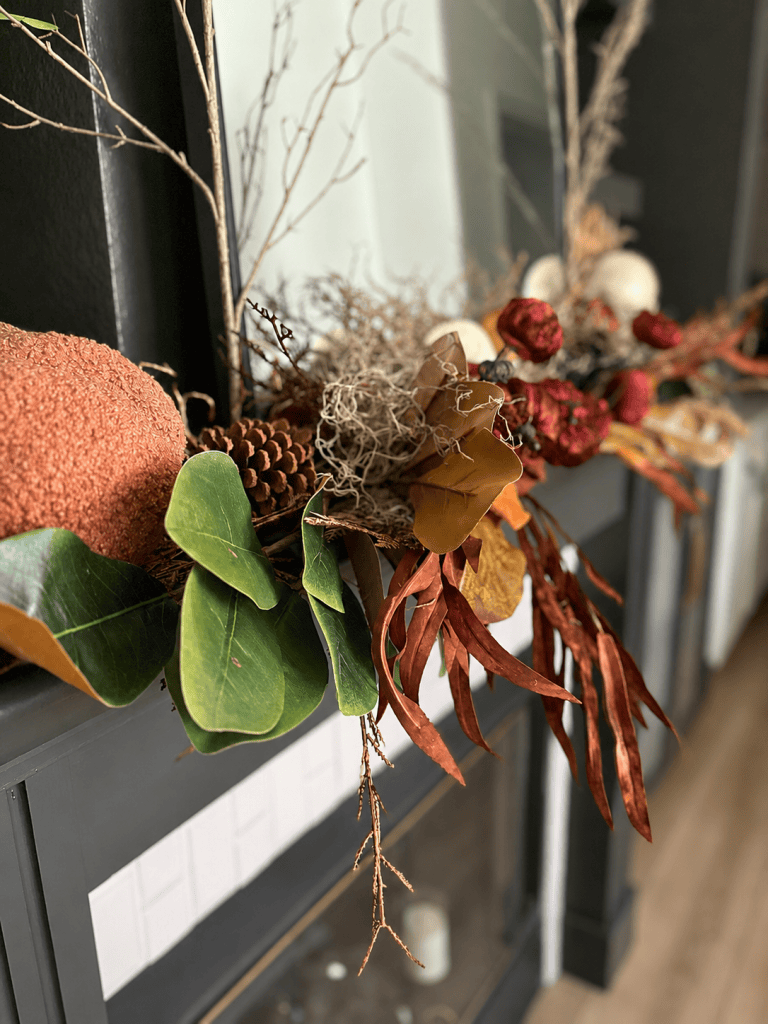
I used mushrooms, moss, branches, small pumpkins and natural textures in little groupings in this centerpiece.
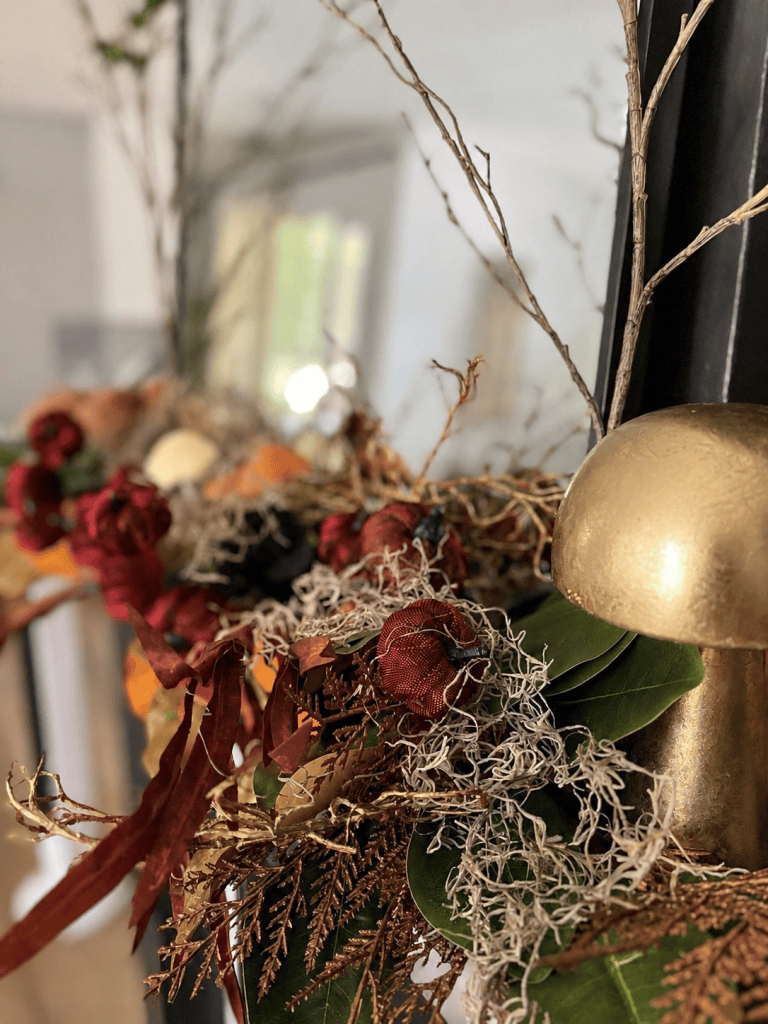
I love how this turned out.
I wanted to bring in little woodland details without making the room feel themed. Instead of using one big statement piece, I layered mushrooms, moss, branches, small pumpkins and different natural textures into the arrangements.
A lot of these pieces are actually very simple on their own. What makes them work is the way they’re layered together — mixing different heights.
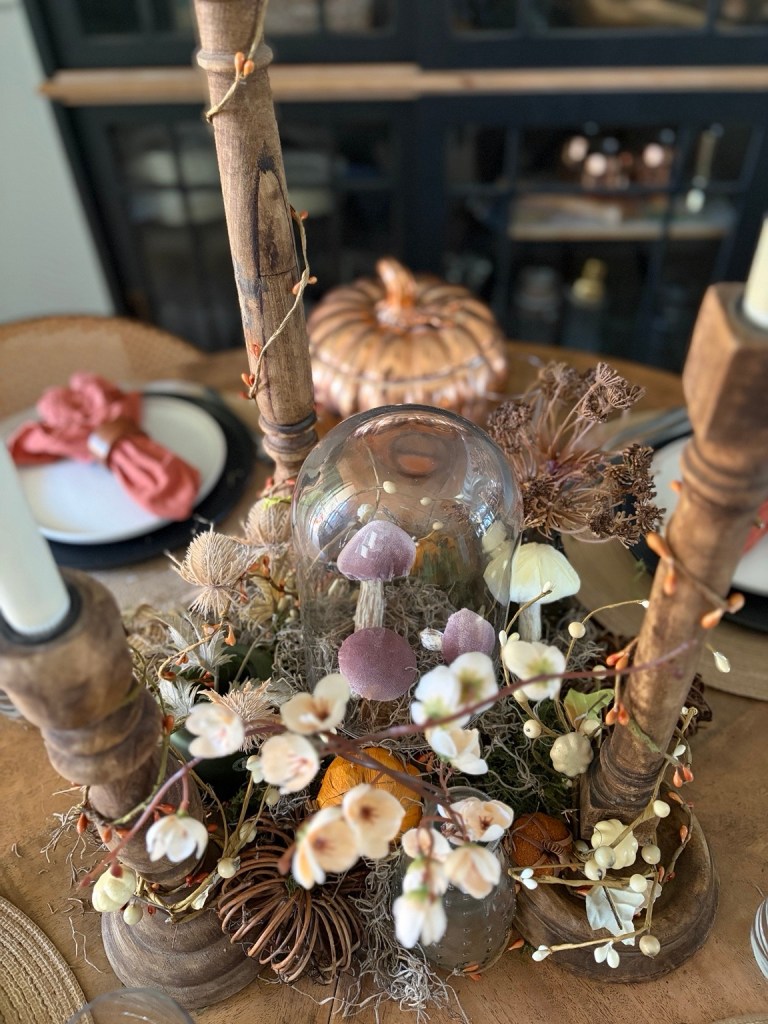
Letting some of the branches look a little wild, tucking moss into empty spaces and repeating just enough of the same elements throughout the room to tie everything together.
I also didn’t want every arrangement to look exactly the same. The fireplace is deeper and moodier, while the dining table is a little softer and more whimsical. They still feel connected because I’m repeating the same colors, textures and woodland elements in different ways.
And because several of these arrangements came together as I was decorating, I’m going to do separate posts showing how I created each piece step by step — including the fireplace arrangement and the woodland dining-table centerpiece. That way, if you want to recreate one part of the look instead of an entire room, you’ll be able to see exactly what I used and how I put it together.
For this post, I wanted to show how all of those individual pieces work together to create the finished early-fall look.
Styling the Built-In Shelves for Fall
I didn’t want to remove everything from the built-ins just because I was decorating for a season.
Instead, I worked around the everyday pieces I already liked.
I added small seasonal details — a pumpkin here, some moss there, a few branches or woodland pieces — and let the regular decor do most of the work.
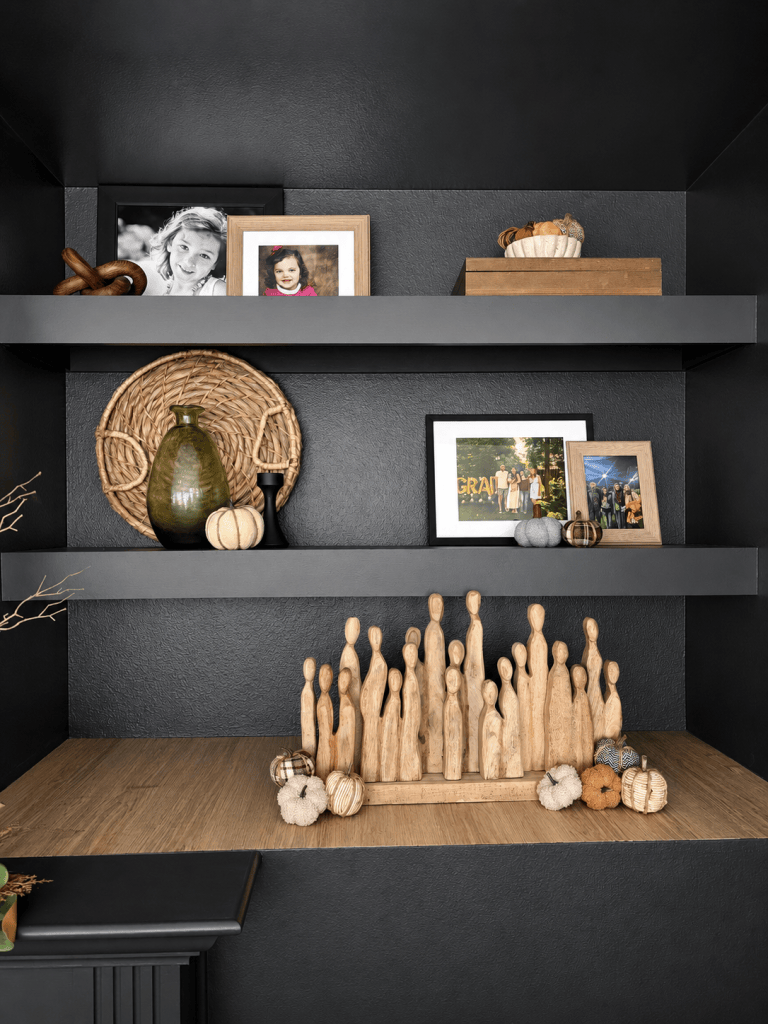
That keeps the shelves from feeling cluttered and means I don’t have to store an entire room’s worth of everyday decor every time a holiday comes around.
A Fall Dining Table We Can Actually Use
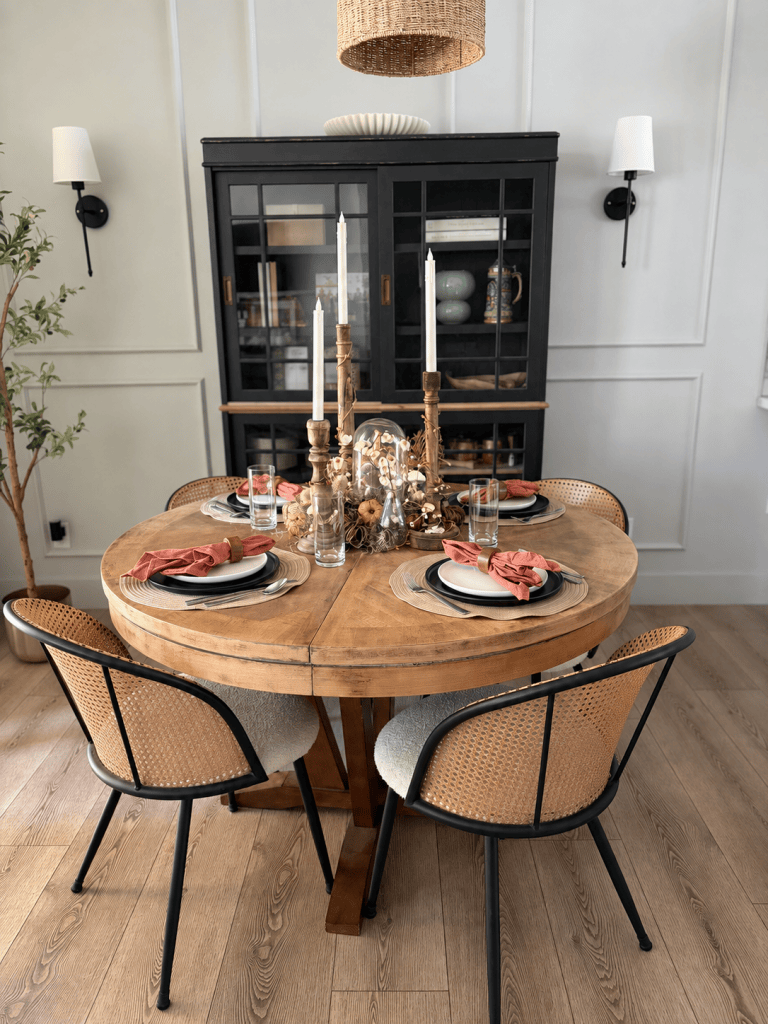
I love a beautiful tablescape.
I do not love dismantling a beautiful table scape every time somebody needs the table.
So I kept this one relatively simple.
This centerpiece uses a low arrangement with candlesticks and natural fall elements, with four place settings styled around it for the finished look.
I even elevated one of my cloches using a hidden bowl underneath it to get the height I wanted.
That is one of my favorite decorating tricks: if something looks wrong, check the height before buying something new.
Books, bowls, trays and small risers can completely change a display.
One thing I realized while putting it together is that a round tray underneath the centerpiece would make this even more functional.
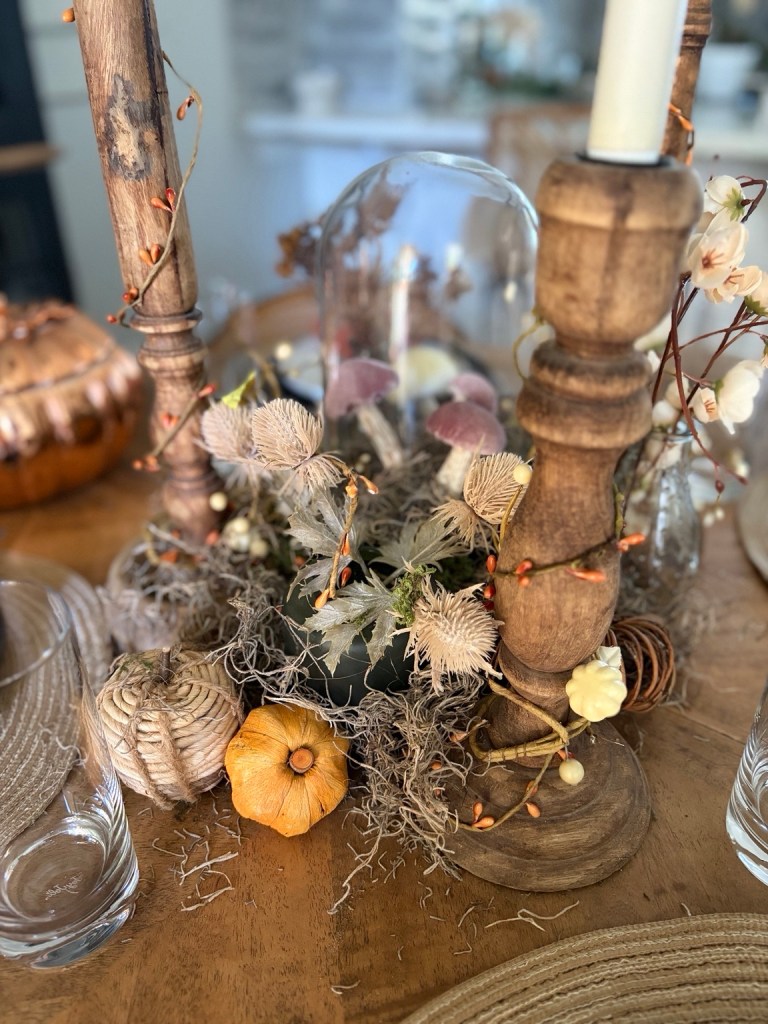
Then, when we actually need the entire table, I could pick up the centerpiece as one piece instead of moving five different things.
I didn’t have the right tray when I photographed this setup, but it’s something I would add if you’re recreating the look at home.
Pretty is good.
Pretty that takes ten seconds to move is better.
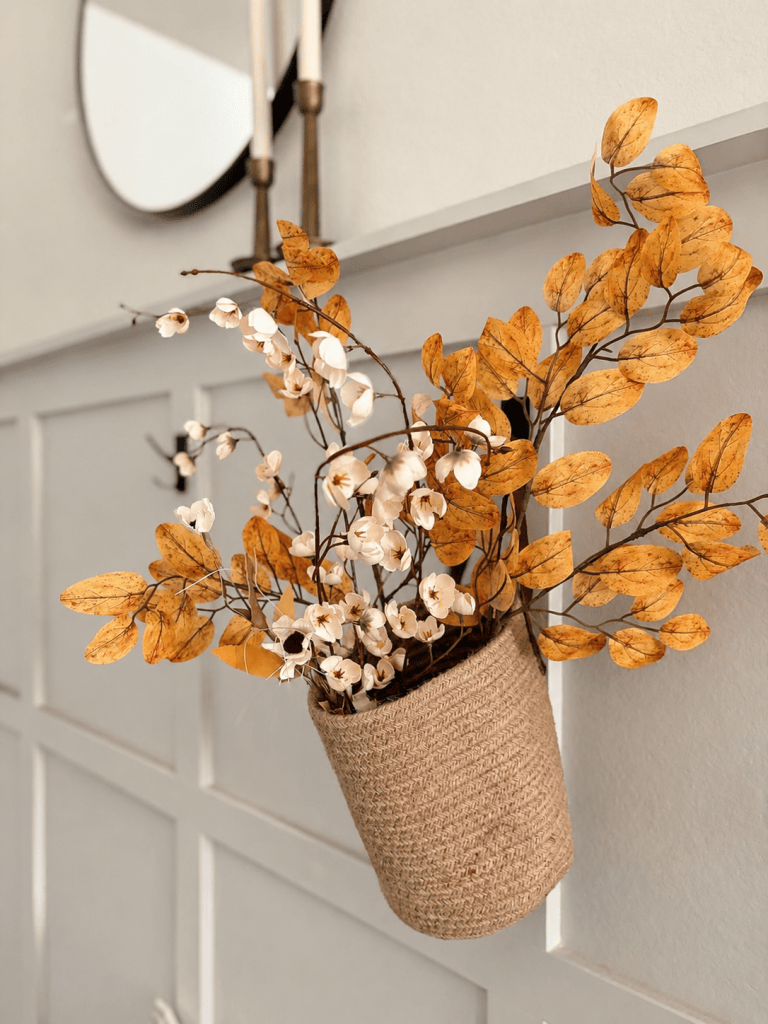
The Entryway
The entryway ended up being one of my favorite spaces.
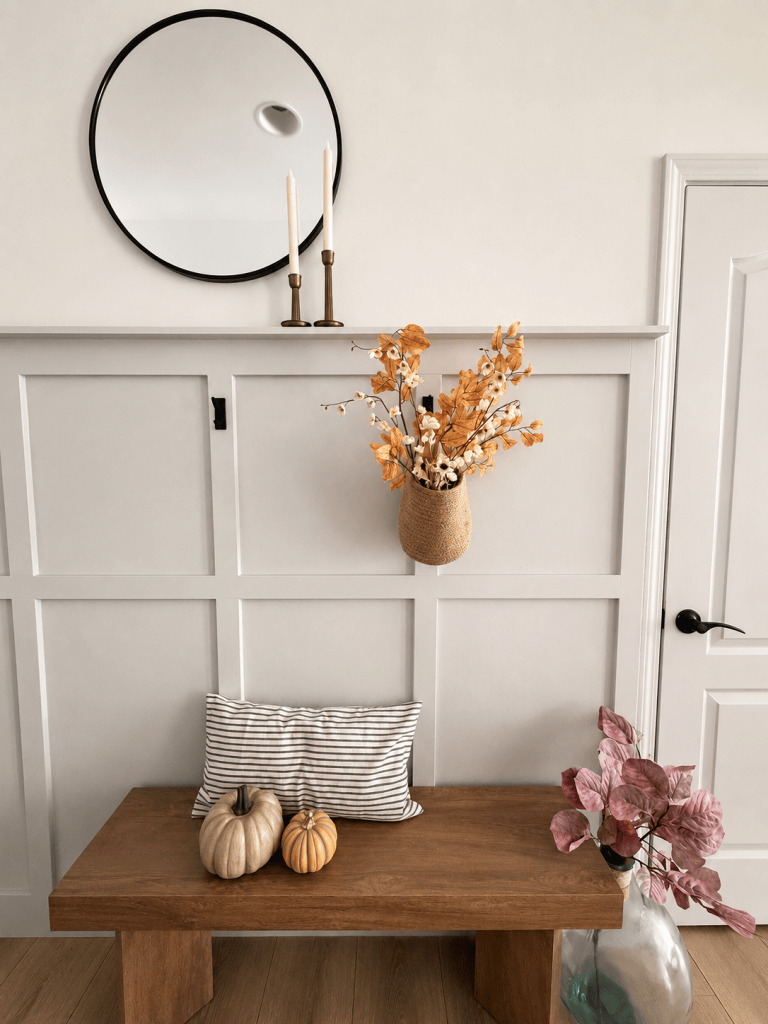
Because it’s a smaller area, it didn’t need much.
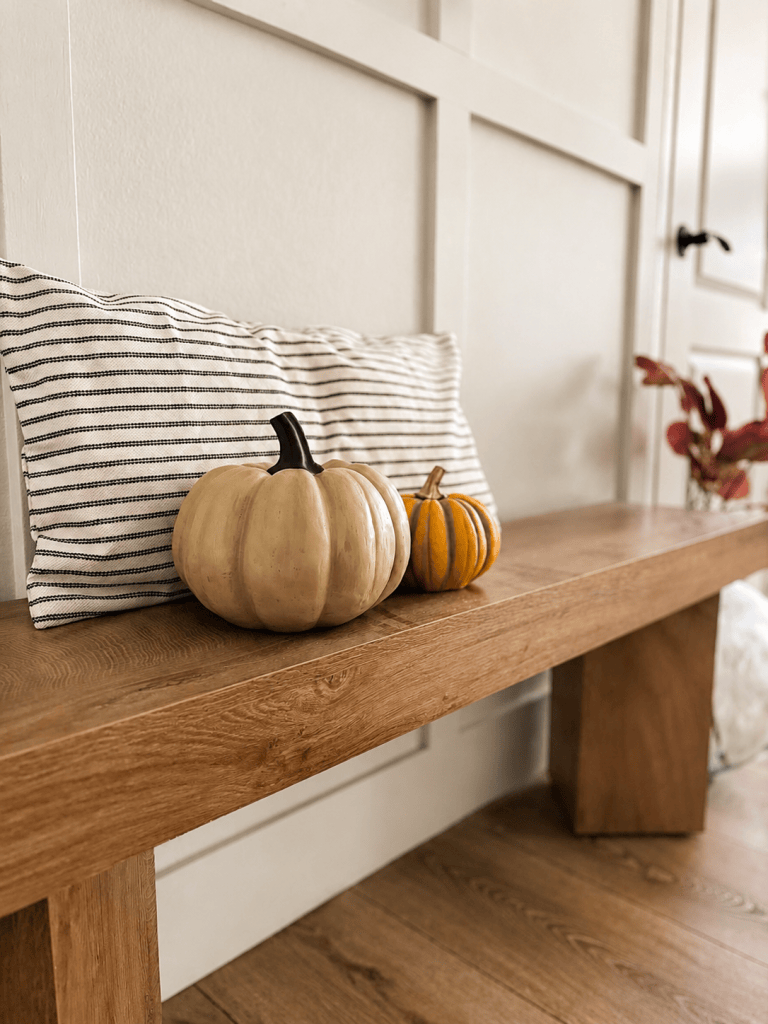
I repeated some of the same colors and natural elements from the living room so the spaces felt connected, but didn’t duplicate the fireplace display.
That’s something I’ve been trying to pay more attention to when decorating: repeat the feeling, not necessarily the exact objects.
Using similar colors, materials and textures throughout the house makes everything feel intentional without making every surface look identical.
Decorating With What You Already Have
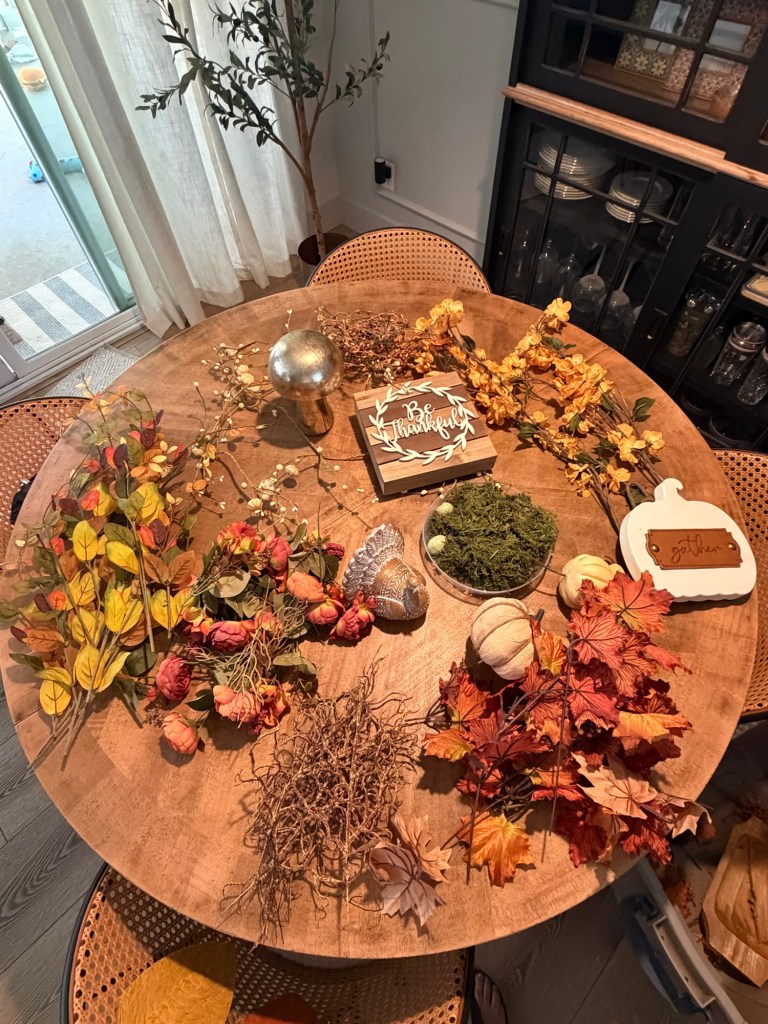
I pulled out essentially all of my fall decor before starting this.
And I’m glad I did.
Seeing everything together made it much easier to decide what still worked in the direction I wanted and what didn’t.
Some older pieces got used differently. Some stayed in storage. Some are ready to be donated.
I would much rather have fewer things that I actually love than keep decorating with something just because I’ve owned it for years.
Before buying a completely new seasonal collection, try pulling everything you own into one place and shopping your own stash first.
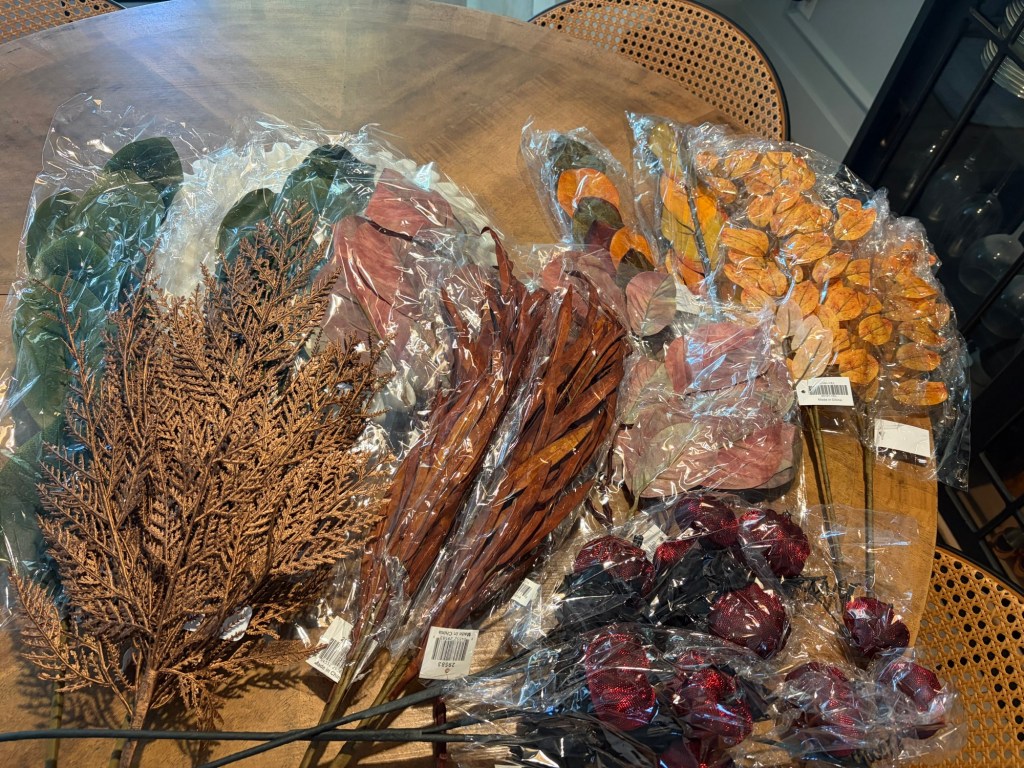
You might be surprised by what looks completely different when it’s paired with something new.
Building a Base for Halloween
This is also why I decorated earlier than I normally would.
I’m not finished.
This is Layer One.
When it’s time for Halloween, I can add darker and slightly spookier elements right over this base — bats, black accents and a few Halloween-specific pieces — without starting over.
The mushrooms, branches, moss, pumpkins and deeper colors can all stay.
Then, after Halloween, I can remove those few spooky pieces and transition the same setup into Thanksgiving.
It’s less work, less storage shuffling and, honestly, a much more realistic way for me to decorate.
My Biggest Takeaway
The biggest difference in my seasonal decorating lately has been thinking less about individual decorations and more about the whole room.
Scale matters.
Height matters.
Texture matters.
And sometimes removing something makes a bigger difference than adding something else.
This year’s early fall decorating feels warmer and moodier than what I’ve done in the past, but it still works with our everyday home.
And that’s exactly what I wanted.
Next up: taking this fall base and making it just spooky enough for Halloween.
Thank you for supporting Poppy & Christen.


Leave a comment